
Which tea ceremony in Kyoto is the best one for you
There is no single best house. There is a best fit for the time you have, the part of town you are in and how long you can kneel.
Most bookable ceremonies in Kyoto serve the same thin matcha with a sweet, and most let you whisk a bowl yourself. What separates them is the setting, how long it lasts, if you kneel, if a kimono is part of it and who else is in the room. Start with the situation that matches yours.
Pick by what matters most to you
-
The longest explanation for a plain ceremony
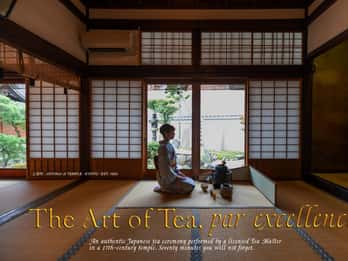
Ju-An runs 70 minutes inside Jotokuji temple near Gojo, with a purification ritual, a demonstration with explanations and your own bowl at the end. Groups of up to 10, children from 5, stools for anyone who cannot kneel.
-
A short stop on the Kiyomizu-dera walk
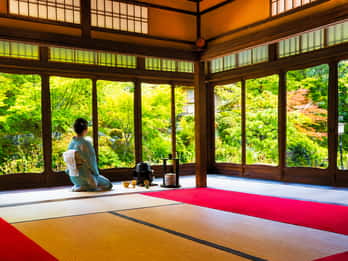
Sakaguchian sits behind two gates on Sannenzaka and takes 45 minutes on tatami, with a garden view and two bowls of matcha. Be there 10 minutes early; children aged 7 and under are not admitted.
-
You want to wear a kimono
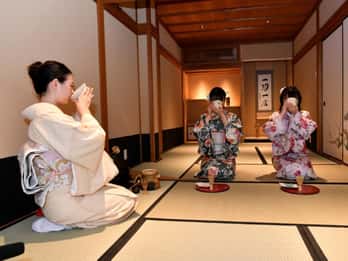
Orizuruya in Gion includes the kimono, from more than 200 designs, and a simple hair styling for women, in about 1.5 hours. Dressing takes the larger part, so the tea itself is shorter.
-
Kneeling is not an option
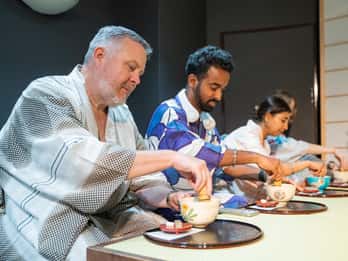
Japan Wonder Travel in Gion seats every guest on a chair, is wheelchair accessible and takes children from 5. A kimono can be added, and latecomers are not admitted.
-
The room to yourselves
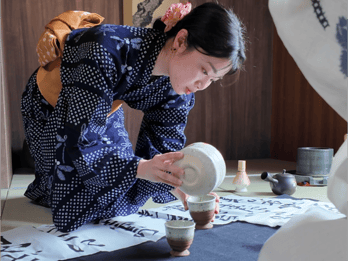
Matcha experience Kyoto reserves a whole machiya near Kyoto Station for your party, with calligraphy in every plan and a kimono plan for those who want one. No other guests share the house.
-
Your day is in Fushimi
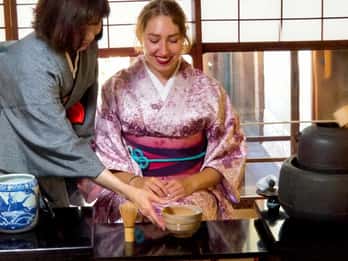
Éclat Japon serves at a table in an old townhouse in Momoyama, with matcha from an Uji farm, calligraphy and photos in the garden. It pairs with Fushimi Inari on the same day.
-
You care more about the tea than the ritual
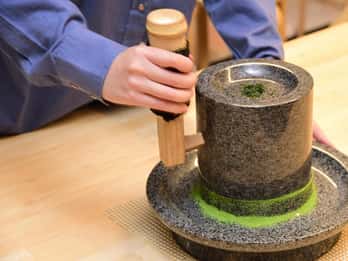
Chazuna in Uji lets you grind leaves on a stone mill and visit a small tea museum in an hour. It is a workshop, not a ceremony, and wheelchair accessible.
What a tea ceremony in Kyoto costs
The cheapest way in is a group ceremony without kimono. Adding a kimono raises the price per person noticeably, and a private room or a half day in Uji costs more again. The table shows the lowest and highest starting price per person in each format right now, taken from the booking platforms.
| Format | Examples on this site | Starting prices per person now |
|---|---|---|
| Group ceremony without kimono | Ju-An, Sakaguchian, Midai, Roxcy, Sanjo Chasuian, Éclat Japon, Japan Wonder Travel, Camellia Flower | $25–$55 |
| Ceremony with kimono included | Orizuruya, GLOBA, Maikoya, Kaouka (kimono for the day) | $49–$62 |
| Private session | Matcha experience Kyoto, Camellia Garden, Zen temple | $66–$113 |
| Uji | Chazuna workshop, guided walk, private tasting at Tokaan | $23–$113 |
Several houses add charges on the day: a kimono at Camellia Flower and Roxcy, an uchikake robe at Sanjo Chasuian, socks where they are compulsory, and the interior of the Phoenix Hall in Uji. Check the option you select before you pay.
Camellia, Maikoya and Ju-An compared
These three names come up together in many searches, yet they sell different things. Camellia Flower is a short group ceremony in an alley off Ninenzaka where the kimono is an extra. Maikoya near Nishiki Market is a kimono session in which, by its own description, you learn the basics within a limited time. Ju-An is a longer ceremony inside a temple, without kimono.
| Tea house | Format | Kimono | Seating | Length | Group | Min. age | Area |
|---|---|---|---|---|---|---|---|
| Camellia Flower | Short group ceremony, kimono optional | At extra cost | Tatami, chairs and tables on request | 45 min | Up to 8 | 6 | Ninenzaka, Higashiyama |
| Maikoya Nishiki | Kimono session with a matcha lesson | Included; hair styling for women | Tatami | Shorter than the total; reviews call it photo-focused | Up to 14 | 7 | Nishiki Market, central Kyoto |
| Ju-An | Temple ceremony with demonstration | Not included | Floor, stools on request | 70 min | Up to 10 | 5 | Gojo, Shimogyo |
If the ritual itself is what you came for, Ju-An gives you the most of it. If wearing a kimono is the point, Maikoya includes one, and the kimono comparison shows the alternatives. Camellia Flower fits best as a short stop on the Higashiyama walk. More on each: Camellia, Maikoya, Ju-An.
Where reviewers disagree
The houses with the most reviews also collect the clearest complaints, and they point the same way. Guests at Ju-An and Sakaguchian describe back-to-back groups and little time for questions; guests at Éclat Japon and Orizuruya say the session was more explanation than ceremony, or shorter than listed. It changes what "best" means for you. A small group at Midai (up to 6) or a private room trades some convenience for a calmer hour. At Midai the host receives guests in the house she grew up in; the catch is the way in, which two reviewers found hard to locate; one of them arrived at the start time and found the group already gone. A Japanese reviewer at Japan Wonder Travel adds a wider point: seen from Japan, much of what visitor sessions present does not feel authentic.
The houses on this page side by side
| Photo | Ceremony | Kimono | Seating | Min. age | Area | Reviews ↕ | Price ↕ | Book |
|---|---|---|---|---|---|---|---|---|
|
Tea Ceremony in a Garden Teahouse near Kiyomizu-dera Sakaguchian | Unclear (listed, a review says not offered) | Tatami (seiza) | 8 | Kiyomizu-dera, Higashiyama | ★ 4.8 (4,510) | $55 per person | Book on GetYourGuide |
|
Tea Ceremony Ju-An at Jotokuji Temple Tea Ceremony Ju-An | Not included | Floor, stools on request | 5 | Gojo, Shimogyo | ★ 4.9 (3,813) | $28 per person | Book on GetYourGuide |
|
Kimono Tea Ceremony at Orizuruya Gion Orizuruya Gion (LINKTIVITY) | Included; hair styling for women | Not stated | Not stated | Gion | ★ 4.9 (1,986) | $49 per person | Book on GetYourGuide |
|
Table-Style Tea Ceremony at a Kyo-Machiya Éclat Japon | Option | Table and chairs | Not stated | Fushimi | ★ 4.9 (1,343) | $44 per person | Book on GetYourGuide |

|
Kimono Tea Ceremony at Kyoto Maikoya, Nishiki Maikoya Nishiki | Included; hair styling for women | Tatami | 7 | Nishiki Market, central Kyoto | ★ 4.9 (1,123) | $52 per person | Book on Viator |
|
Tea Museum Ticket and Matcha Grinding Experience in Uji Chazuna | Not included | Not stated | Not stated | Uji | ★ 4.9 (1,071) | $23 per person | Book on GetYourGuide |
|
Traditional Tea Ceremony with Matcha and Sweets in Gion Japan Wonder Travel | Option, until 17:30 | Chairs | 5 | Gion | ★ 4.8 (714) | $25 per person | Book on GetYourGuide |

|
Authentic Kyoto Tea Ceremony at Camellia Flower Teahouse Camellia Flower Teahouse | At extra cost | Tatami, chairs and tables on request | 6 | Ninenzaka, Higashiyama | ★ 4.8 (305) | $36 per person | Book on Viator |
|
Private Tea Ceremony, Calligraphy and Kimono Matcha experience Kyoto | Option (kimono plan) | Not stated | Not stated | Near Kyoto Station | ★ 5.0 (239) | $66 per person | Book on GetYourGuide |
The prices shown here are refreshed from GetYourGuide and Viator and may still change at checkout, for example when you add a kimono or a private slot.
Guests on what made their ceremony
Quotes from seven tea houses. The critical ones are mostly about format: a guest at Éclat Japon wanted more ceremony and less explanation, a Japanese guest at Japan Wonder Travel found visitor sessions short on authenticity, and a one-star guest at Chazuna found it too touristy. The one-star review from Midai is about finding the house in time, which is why the location column matters.
“I went in with an open mind and let the learning about process and tradition settle in. … I found the setting and pace and hands on experience made for a first class experience.”
“A very peaceful and captivating performance by the tea host in the most beautiful setting and with a great amount of information provided by the guide.”
“Excellent experience with a local in old old house. Small group was good. Very friendly and traditional but in a relaxed setting. Felt like she was welcoming us to her family. Highly recommended”
“The kimonos were of great quality and the fitting more elaborate than we imagined. … There was a lovely relaxed atmosphere with a first rate tea ceremony complete with food. The garden was good for photos.”
“The people running it were very nice but it wasn't quite what we imagined it to be. Our kimono fitting was sweet but we were expecting more of a tea ceremony rather than an explanation of tea ceremonies (accompanied by a tea ceremony.”
“Tea ceremonies for foreign visitors often include explanations about the history of tea, how to prepare matcha, and the etiquette involved. However, from a Japanese perspective, I often feel that much of what is presented isn’t authentic. …”
“Location very poorly signposted. We were there at 1 pm sharp but everyone was already gone???? So we could not take part in the activity. A pity! I understand that they want to start on time, but then the place must be better signposted.”
“ultra tourist , no organization , no respect for matcha rituals”
Written by guests after their tea ceremony, from GetYourGuide.
Questions about tea ceremonies in Kyoto
What is the best tea ceremony in Kyoto for first-timers?
One with plenty of explanation and a moderate length. Ju-An at Jotokuji runs 70 minutes with a demonstration and explanations of each step, and Sakaguchian on Sannenzaka covers the same ground in 45 minutes.
Camellia or Maikoya?
Camellia Flower is a short group ceremony on tatami (chairs on request) where a kimono costs extra. Maikoya Nishiki includes a kimono and describes its session as an introduction to the basics within a limited time. For a longer ceremony without kimono, Ju-An is the third option.
How much does a tea ceremony in Kyoto cost?
It depends on the format: a group ceremony without kimono is the cheapest, a kimono package costs more per person, and private sessions and Uji half days more again. The price table on this page shows current starting prices.
Which tea ceremony is best with children?
Ju-An and Japan Wonder Travel take children from 5, and Japan Wonder Travel seats everyone on chairs. Kimono packages mostly start at 7.
Is a temple tea ceremony different from one in a tea house?
The steps are the same. At Ju-An the setting is the Grand Tearoom of Jotokuji temple and the session opens with a purification ritual at the temple fountain; tea houses such as Sakaguchian use a private garden instead.
Still undecided?
The full comparison shows every bookable ceremony with seating, kimono and area.
Open the comparison