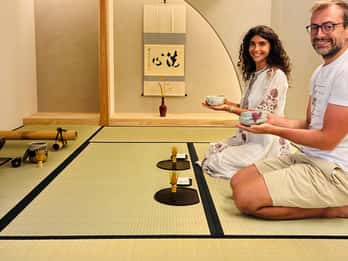
Why kneeling matters
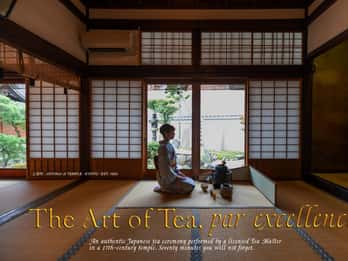
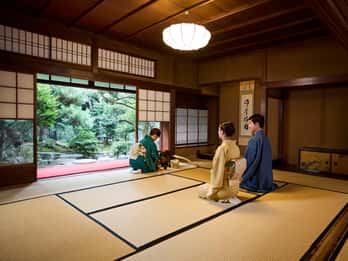
Seiza means kneeling with your weight on your heels. For people not used to it, half an hour is hard on knees and ankles. The Japan Tourism Agency's multilingual guide to tea etiquette says guests may also sit cross-legged or to one side; that still means the floor, so plan for chairs if your knees object.
Three ways to avoid the floor
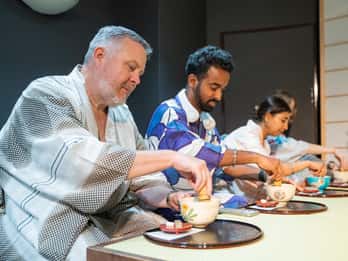
The first is a house where everyone sits up. Japan Wonder Travel in Gion holds every session on chairs and is wheelchair accessible. Roxcy on Ninenzaka serves at a table in the ryurei style, a form of the ceremony made for chairs, although its narrow, steep stairs rule out wheelchairs. Éclat Japon in Fushimi also seats guests at a table, about 20 to 30 minutes by train from the centre.
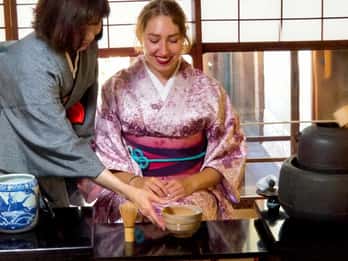
The second is a tatami house with chairs on request. Sanjo Chasuian near Karasuma Oike has chairs for those who prefer them, GLOBA brings bamboo chairs if you ask in advance, Yumeyakata offers small chairs, Camellia Flower brings chairs and tables, and Ju-An keeps seats and stools ready. Ask when you book, not at the door.
The third is a private room, where the setting adapts to you. Camellia Garden opposite Ryoan-ji has chairs and tables and is wheelchair accessible; the private sessions page has the details.
Age limits for children
Every house sets its own minimum age. Tokaan in Uji welcomes toddlers, and in Kyoto itself Ju-An and Japan Wonder Travel take children from 5. Many houses start at 6 or 7, Sakaguchian at 8, and Yumeyakata at 10. Where the table says "Not stated", the listing names no age, so ask the house before you book with small children. At Maikoya the rule is strict enough that a party including a child under 7 cannot book at all.
| Tea house | Min. age | Seating | Note |
| Tokaan |
No limit stated |
Not stated |
Toddlers welcome; a quiet space |
| Tea Ceremony Ju-An |
5 |
Floor, stools on request |
|
| Japan Wonder Travel |
5 |
Chairs |
|
| Roxcy |
6 |
Table and chairs |
|
| Midai |
6 |
Tatami |
|
| Sanjo Chasuian |
6 |
Chairs on request |
Under 6 only in a private session |
| Camellia Flower Teahouse |
6 |
Tatami, chairs and tables on request |
|
| GLOBA |
7 |
Tatami, bamboo chairs on request |
|
| Kaouka |
7 |
Not stated |
|
| Maikoya Nishiki |
7 |
Tatami |
A party with a younger child cannot book |
| Sakaguchian |
8 |
Tatami (seiza) |
No entry for children aged 7 and under |
| Kyoto Kimono Rental Yumeyakata |
10 |
Floor or small chairs |
|
| Orizuruya Gion |
Not stated |
Not stated |
|
| Orizuruya Nishiki |
Not stated |
Not stated |
|
| Matcha experience Kyoto |
Not stated |
Not stated |
|
| Éclat Japon |
Not stated |
Table and chairs |
|
| Chazuna |
Not stated |
Not stated |
|
| Camellia Tea Ceremony |
Not stated |
Floor, chairs and tables available |
|
Pregnancy
Three houses set rules. Kaouka does not dress pregnant guests in a kimono and does not let them take part in the ceremony, because of the tight clothing and the seated posture. Éclat Japon withholds only its kimono option. Yumeyakata lists pregnant women among the guests the session is not suitable for. Elsewhere the listings are silent; a plain ceremony on chairs avoids both the kimono and the kneeling.
With children, book the plain ceremony
Kimono packages carry the higher age limits and the longer sessions. Japan Wonder Travel takes five-year-olds and seats them on chairs, and the whole visit lasts about an hour. If a child gets restless, a private room such as Camellia Garden or the machiya of Matcha experience Kyoto spares the other guests.